
How Messy Books Quietly Cause Small Businesses to Overpay Taxes
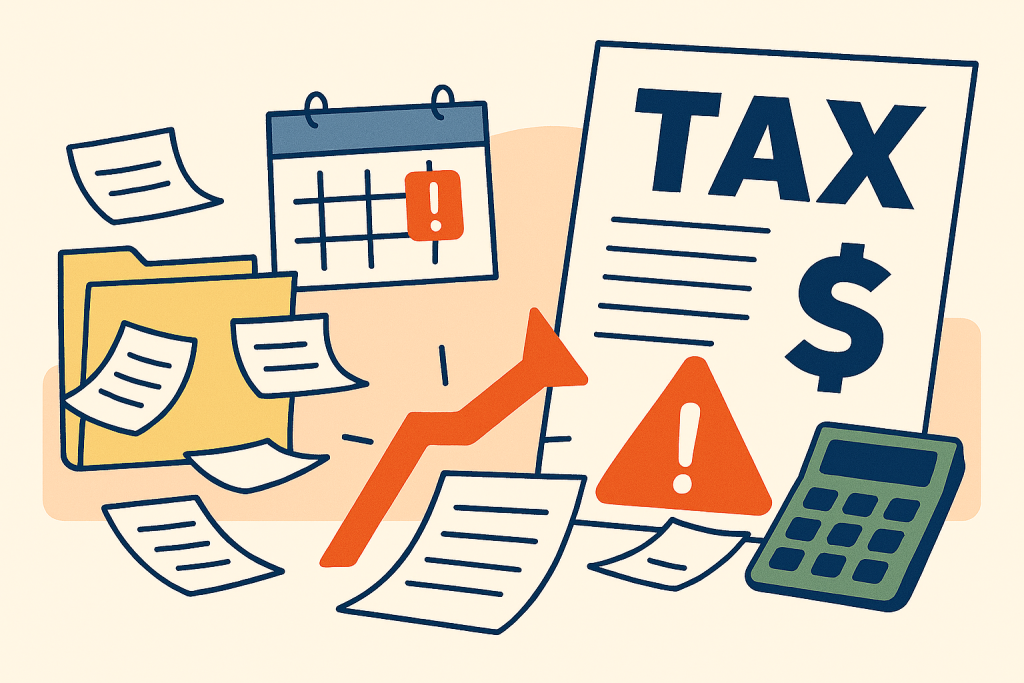
When business owners overpay taxes, it’s rarely because deductions don’t exist.
More often, it’s because the financial records don’t clearly support them.
This is one of the most common issues that surfaces every tax season — especially as the March 15 business filing deadline approaches. By the time the problem becomes obvious, options are already limited.
Why Bookkeeping Matters During Tax Season
Bookkeeping isn’t just about recording transactions.
It directly impacts:
- Which deductions can be confidently claimed
- How tax positions are supported
- Whether elections and adjustments are considered
- How smoothly a return can be prepared
When records are incomplete or inconsistent, tax preparation becomes conservative by necessity — even when income levels are modest. The result is often a higher tax bill than required.
What “Messy Books” Usually Look Like
Messy books don’t always mean obvious errors or chaos. In fact, they’re often subtle.
Common examples include:
- Expenses sitting uncategorized
- Personal and business transactions mixed together
- Owner payments recorded inconsistently
- Bank and credit card accounts not fully reconciled
- Financial reports changing each time they’re reviewed
Individually, these issues seem manageable. Collectively, they weaken the reliability of the numbers — and that’s where the cost begins.
How Messy Books Lead to Higher Taxes
When financial records aren’t clear:
- Conservative assumptions are used
- Certain deductions are avoided due to lack of support
- Timing opportunities are missed
- More effort goes into fixing past issues instead of planning ahead
In practice, this means business owners may legally owe more tax than necessary, simply because the information doesn’t allow for confident decisions.
How the Mess Builds Over a 12-Month Period
Messy books rarely appear overnight. They accumulate quietly.
It often starts with small shortcuts:
- A receipt set aside “for later”
- An estimated category to save time
- A skipped reconciliation during a busy week
Over months, those shortcuts compound.
By mid-year, the books start telling half-truths. By year-end, the numbers feel unreliable — and fixing them becomes significantly harder.
The Real Costs Business Owners Don’t See Right Away
1. Distorted Cash Flow
When expenses or income are misrecorded, cash flow projections drift from reality. Decisions about hiring, inventory, or expansion are made using incomplete data.
A business may appear healthier — or weaker — than it truly is. Both scenarios lead to poor decisions.
2. Tax Season Turns Reactive
Messy books surface most painfully during tax preparation. At that point, business owners often discover:
- Expenses that could have been deducted but weren’t tracked properly
- Income recorded twice
- Receipts missing or unsupported
- Deductions that can’t be claimed confidently
Instead of planning, time is spent untangling.
3. Time Lost to Cleanup
Reconstructing a year of financial activity takes far longer than maintaining it monthly. What could have been fixed in minutes now takes hours — often during the busiest time of year.
4. Missed Growth Opportunities
Unclear numbers make it difficult to evaluate opportunities. Pricing adjustments, new offerings, or partnerships may be delayed simply because the financial picture isn’t trustworthy.
Messy books don’t just cause mistakes — they prevent progress.
Why This Matters Before March 15
As filing deadlines approach:
- There is less time to clean records
- Fewer planning options remain
- Decisions become rushed
Clear, well-organized books allow tax returns to be prepared accurately — without last-minute pressure or missed opportunities.
What Clean Books Actually Give You Back
Clean books don’t just reduce tax risk. They restore clarity.
When records are accurate:
- Trends are easier to spot
- Decisions feel grounded
- Tax preparation becomes smoother
- Financial stress decreases
Many business owners describe the shift as subtle but powerful — like finally turning on the lights in a room they’ve been navigating in the dark.
Summary
Tax outcomes are shaped long before a return is filed.
They begin with bookkeeping — quietly, month by month.
Addressing messy books before year-end doesn’t just simplify tax season. It often leads to better decisions, fewer surprises, and money kept where it belongs.
If you’re unsure whether your books are truly tax-ready, a short review can make a meaningful difference.
Booking a consultation with our bookkeeping specialists can help identify gaps, clean up inconsistencies, and ensure your records accurately reflect your business — before tax season pressures set in.