
Why DIY Catch-Up Bookkeeping Rarely Works
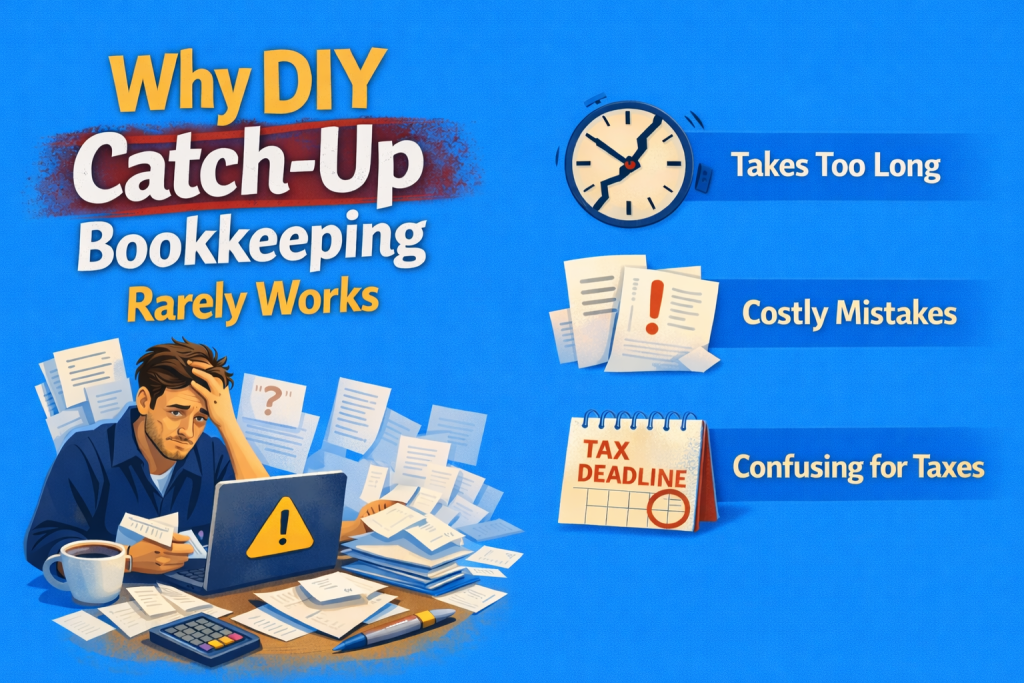
When tax season approaches, many business owners tell themselves, “I’ll just catch up on my books this weekend.” It sounds simple — until they start.
The reality is that catch-up bookkeeping is very different from day-to-day bookkeeping, and most DIY attempts fall apart for a few key reasons.
It Takes Far More Time Than Expected
Catching up months of bookkeeping isn’t a quick task. Each month requires:
- Reviewing bank and credit card statements
- Categorizing every transaction
- Reconciling balances
- Investigating missing or duplicate entries
What business owners expect to take a few hours often turns into 20–40+ hours — time pulled directly away from running the business.
Small Errors Create Big Tax Problems
DIY bookkeeping usually focuses on “making it look right,” not “making it tax-correct.”
Common DIY mistakes include:
- Recording sales tax as income
- Missing deductible expenses
- Misclassifying contractor or payroll payments
- Overstating income by counting deposits instead of revenue
These errors can lead to overpaid taxes, filing delays, or questions from tax authorities — even when the numbers look fine on the surface.
Most Business Owners Don’t Know What Accountants Actually Need
Tax filing requires specific, clean, and consistent financial reports. DIY catch-up often produces books that:
- Look complete but aren’t reconciled
- Don’t match supporting documents
- Trigger follow-up questions from accountants
This leads to back-and-forth emails, delays, and higher tax prep fees.
Motivation Drops When Things Get Complicated
Many DIY attempts start strong — and stop once confusion sets in.
Unfamiliar transactions, missing receipts, or old discrepancies cause business owners to:
- Skip months “for now”
- Guess categories
- Abandon the process entirely
By the time tax deadlines arrive, the books are still unfinished — just more stressful.
Catch-Up Bookkeeping Is a One-Time, High-Pressure Task
Unlike ongoing bookkeeping, catch-up work is:
- Time-sensitive
- Detail-heavy
- High risk if done incorrectly
It’s not just data entry — it’s cleanup, correction, and preparation for tax filing.
This is why many small businesses turn to Remote Books.
We specialize in bookkeeping catch-up and business tax filing, so you don’t have to spend nights and weekends fixing months of financial data — or worry whether it’s done correctly.
👉 Let one professional team clean up your books and file your taxes — before deadlines hit.