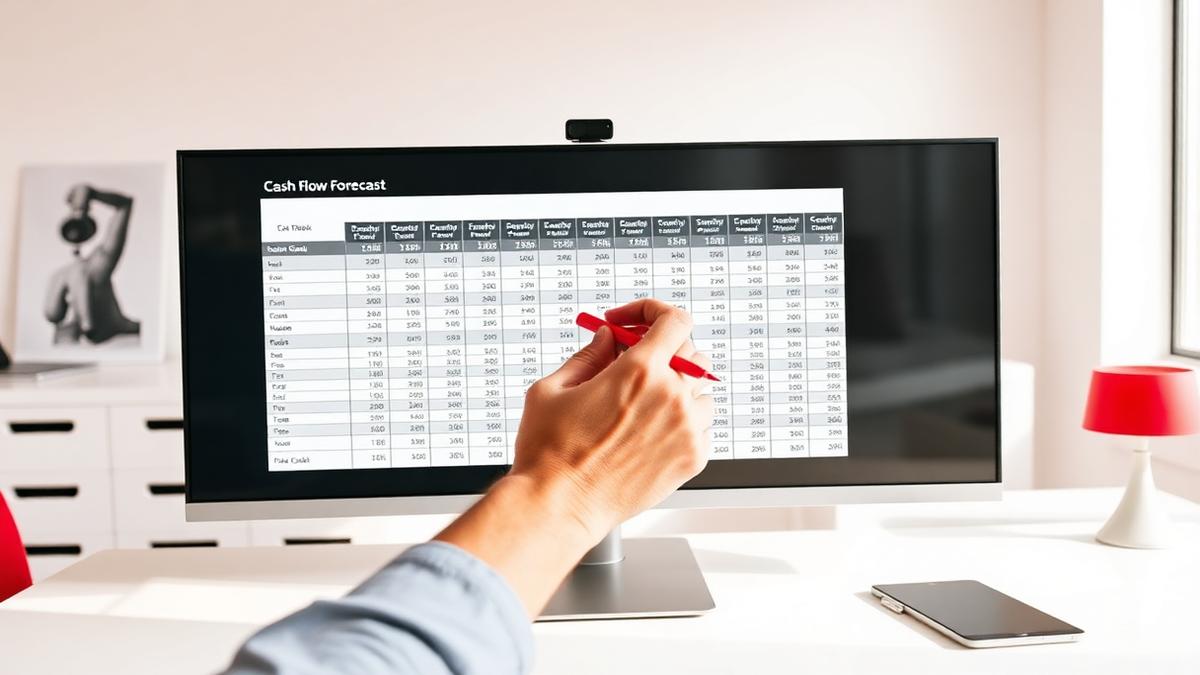
Annual budgets tell you what you hoped for. A rolling 13-week cash flow forecast tells you whether payroll clears in nine weeks — and gives you time to act if it won't. That distinction matters more than most founders expect until the first quarter they need it.
Why annual budgets fail in practice
A budget is a plan built once a year, under whatever assumptions were true in January. By the second quarter, actual revenue timing, a slower-paying client, or an unplanned hire has already made it stale — yet most businesses keep comparing actuals against it anyway, because it's the only forward-looking document they have. The problem isn't that budgets are wrong. It's that they were never designed to answer the question that actually matters week to week: do we have enough cash on hand.
Building the forecast
The build starts with a real opening cash balance, then a week-by-week list of expected receipts — client payments by realistic expected date, not invoice date — against known disbursements: payroll, rent, loan payments, and recurring vendor bills. Anything irregular, like a large one-off purchase or a tax remittance, gets its own line rather than getting smoothed into an average, because averages hide exactly the weeks you need to see clearly.
For most small and mid-sized businesses, this takes a single spreadsheet and about an hour to set up properly, with the AR aging report as the main input for the receipts side.
Why rolling beats static
The rolling part is what makes it useful. Every week, the oldest week drops off and a new one is added, so you're always looking 13 weeks ahead instead of comparing actuals to a plan that was written in January and is already stale by March. A tight week eight weeks out is visible in week one — while there's still time to accelerate collections, delay a discretionary purchase, or have the financing conversation before it's urgent.
Keeping it honest
We tie the forecast directly to the AR aging report and update it weekly, not monthly. A forecast that's a month old by the time you read it isn't a forecast — it's a history lesson. The other habit worth building: compare last week's forecast to what actually happened, every week. The gap tells you exactly which assumptions to tighten, and the forecast gets more accurate the longer you keep it running.
Want this handled for you?
Our CPA-supervised team keeps books current, filings on time and reporting predictable.