Canadian GST/HST registrants do not treat sales tax as a permanent cost of doing business. When you buy taxable goods or services for commercial activities, you generally recover the GST/HST paid or payable by claiming input tax credits (ITCs) on your return — typically on line 106. The filing-deadlines calendar tells you when the return is due. This piece is about whether the credit itself stands up: eligibility, documents, timing, and the coding habits that keep ITCs from disappearing into Uncategorized until CRA asks for the invoice. This is not the same as remitting on time. A remittance filed on schedule can still be wrong if ITCs were claimed without support, claimed for non-commercial use, or claimed after the statutory window closed. Remote Books supports bookkeeping for clients across Canada and the United States. Canadian T1 and T2 work stays Canada-only. We do not prepare U.S. income tax returns, and we do not offer audit or assurance services.
The eligibility test, not a vibe check
Per the Canada Revenue Agency, you may be eligible to claim an ITC when all of the following apply: you acquired, imported, or brought into a participating province property or a service for consumption, use, or supply in your commercial activities; you were a GST/HST registrant in the reporting period when the tax was paid or became payable; GST/HST was paid or payable by you on that supply; you obtained sufficient documentary evidence before you claim the credit; and you claim the ITC in a return filed within the time limit.
Commercial activity is the hinge. Purchases that support exempt supplies generally do not generate ITCs. Mixed-use costs — a vehicle, phone, home office, or travel that is partly personal — need a fair and reasonable allocation you can explain and apply consistently. It felt like a business expense is not a method. If the purchase is unreasonable in quality, nature, or cost relative to your business, CRA can deny or reduce the credit even when an invoice exists.
Documents before you claim — not after CRA asks
You must have sufficient documentary evidence before you claim the ITC on a return. CRA’s information requirements scale with the amount of the supply. In broad terms: every supporting document needs the supplier’s name or trading name, the date, and the total. For supplies of $100 to $499.99, you also need tax amount or tax-included wording at the applicable rate, an indication of taxable versus exempt where both appear, and the supplier’s GST/HST registration number when applicable. For supplies of $500 or more, add the recipient’s name (or authorized agent) and a description of the supply, plus terms of payment when relevant.
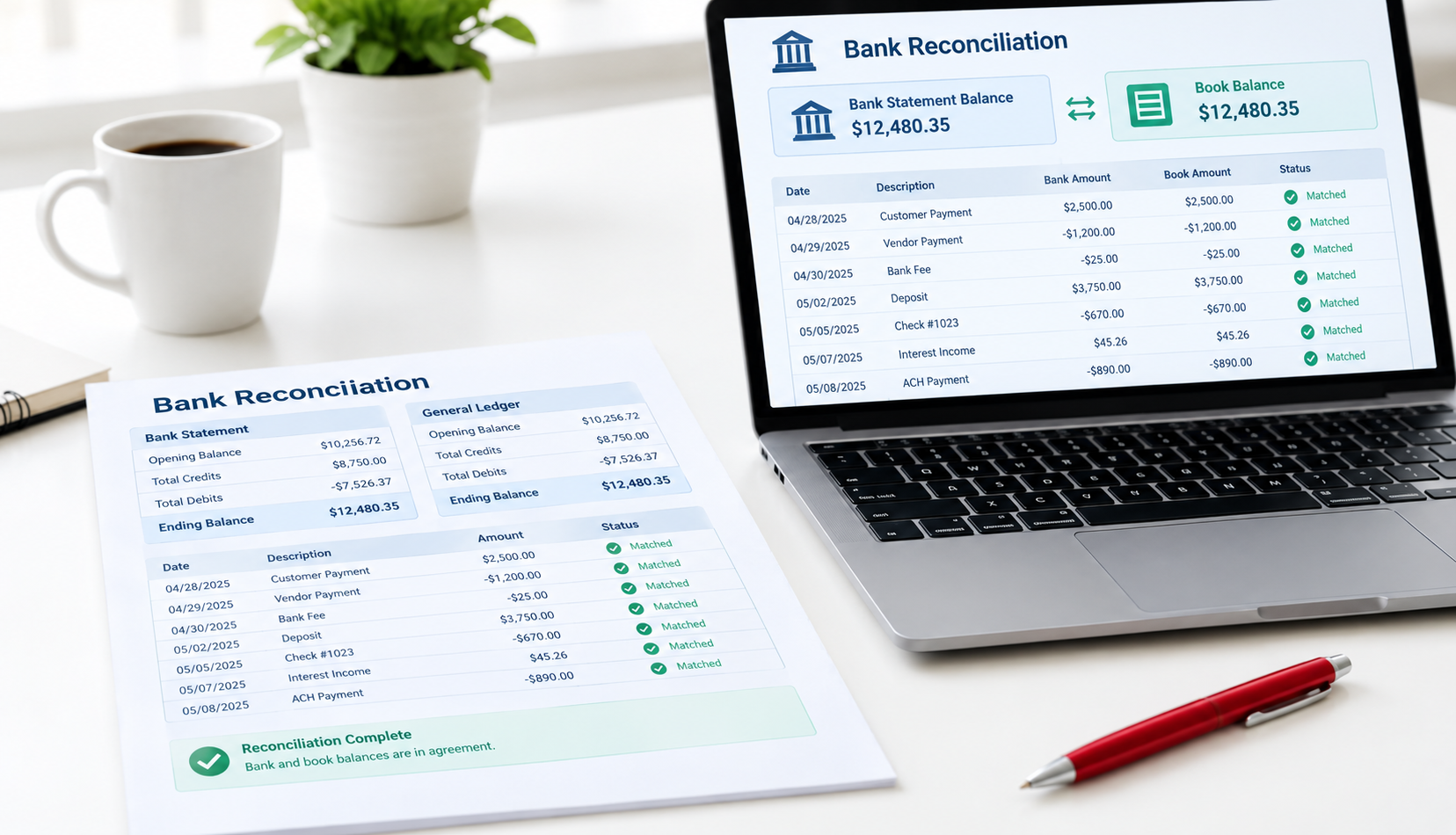
Bookkeeping practice that matches those rules: do not code an ITC from a bank description alone; attach or link the invoice in the ledger before the period closes; reject vendor invoices missing a registration number on mid-and-large amounts; and clear Ask-my-accountant / Suspense before you draft the GST/HST return. ITCs claimed from a credit-card feed with no PDF are the first ones that fail a desk review.
Claim windows: four years for most, tighter for some
Most registrants claim ITCs on the return for the period in which the purchase was made. If you miss that period, you can usually claim them later — but not forever. For most registrants, ITCs must be claimed by the due date of the return for the last reporting period that ends within four years after the end of the reporting period in which the ITC could first have been claimed. Specified persons (including many listed financial institutions and certain large businesses under the rules that apply to them) generally face a two-year window. Confirm your category before you assume you have four years of runway.
September 2026 is a useful reminder week: summer invoices often sit uncoded while owners catch up after vacations. Pull open GST/HST control accounts now. Match each ITC candidate to an invoice. Move personal charges out of the commercial pool. File the current-period return with support in hand — do not plan to fix it next quarter if the documentation is already incomplete.
What usually breaks ITCs in practice
Four patterns show up again and again on Canadian SME files. First, personal or partly personal costs booked 100% to the business — meals, vehicles, and home costs without an allocation. Second, ITCs claimed on exempt purchases or on zero-rated misunderstandings (zero-rated supplies may still involve recoverable tax on inputs, but the coding has to match the actual supply status). Third, supplier invoices that never show a GST/HST number on amounts that require it. Fourth, claiming in a later period after the time limit has closed, or adjusting prior periods without a clear working paper.
U.S. sales tax on U.S. purchases is not a Canadian ITC. Keep Canada GST/HST and U.S. sales-tax recoverable amounts in separate control logic so a multi-jurisdiction client does not recover the wrong tax on the wrong return.
This week’s checklist for Canadian registrants
List every bank and credit-card account that carries taxable purchases. Reconcile the GST/HST recoverable (ITC) and payable accounts to the draft return, not only to the bank. Spot-check ten invoices against CRA’s documentation thresholds for their dollar band. Flag mixed-use items and document the percentage used in commercial activities. Diarize your filing frequency so the claim lands inside the correct reporting period and inside the four-year (or two-year) window.
If your books are still catching summer transactions, finish coding before you finalize the remittance. Collected GST/HST is not operating float, and unsupported ITCs are not a shortcut to a smaller payment.
Want this handled for you?
Our CPA-supervised team keeps books current, filings on time and reporting predictable.