
A repeatable close is what separates books you can borrow against from books you have to apologize for. This is the exact sequence our team follows every month, regardless of client size or industry — because a close that changes shape each time is the fastest way to lose a lender's confidence, or your own.
Why closes drift
Most bookkeeping doesn't fail because of a single bad entry. It fails because the close is done differently each month — a step skipped during a busy week, a reconciliation postponed until "next month," a shortcut taken under deadline pressure that quietly becomes the new normal. None of these individually breaks the books. Compounded over a year, they make the trial balance unreliable exactly when you need it most.
The reconciliation half
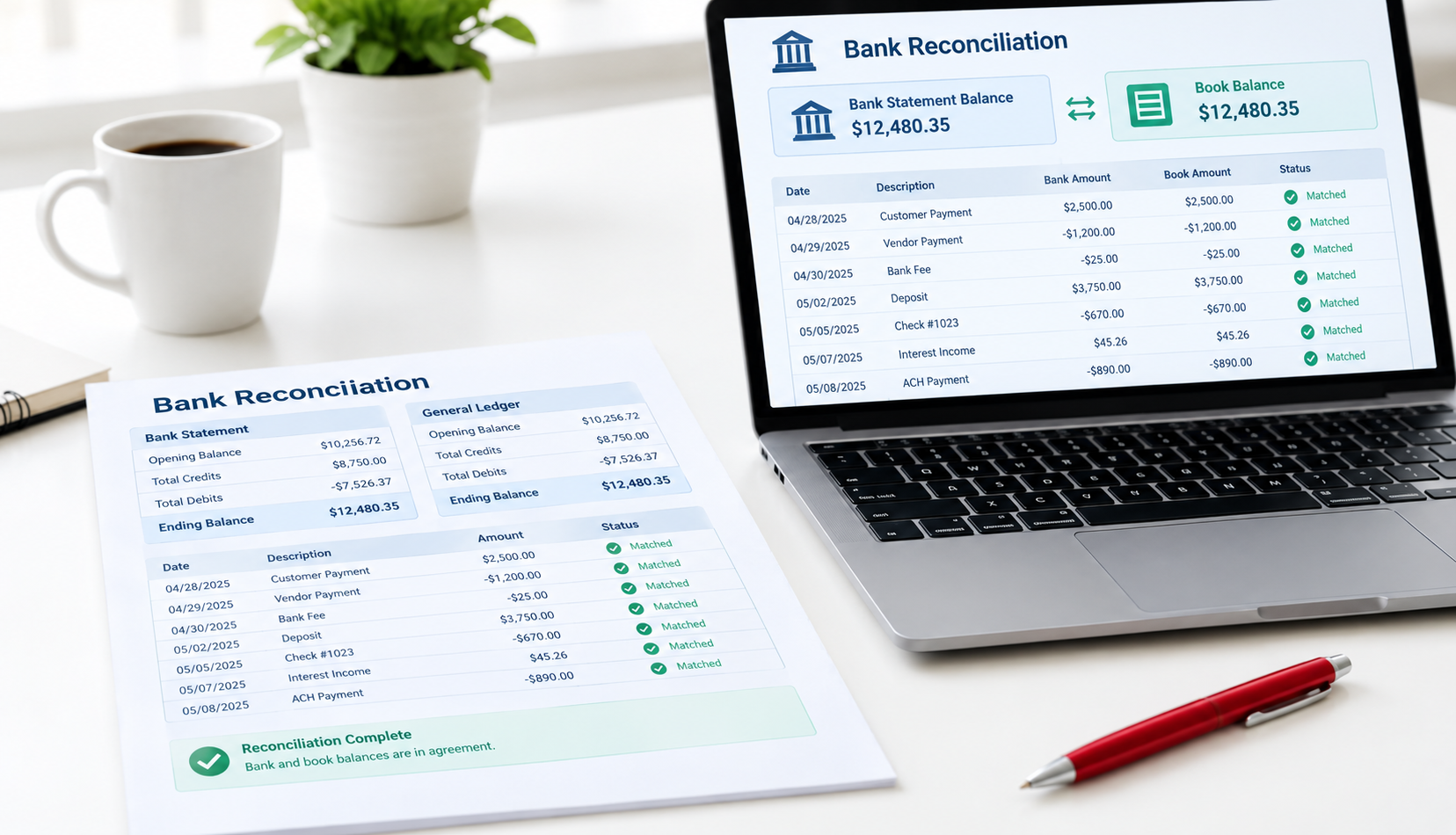
The first six steps are reconciliation, and they're non-negotiable: every bank and credit card account matched to the statement, every payment processor payout traced to its batch, and any unexplained variance flagged before it's buried under next month's transactions. Accounts receivable and payable aging get reviewed at the same time rather than left for the quarter, so a slow-paying client or an overdue vendor bill surfaces while it's still easy to act on.
We also reconcile any loan or line-of-credit balance to the lender's statement every month, not just at year-end — interest accruals and principal splits are a common source of quiet, compounding errors.
The judgment half
The second half of the checklist is judgment work — accruals for expenses incurred but not yet billed, amortizing prepaid balances on a schedule rather than by memory, and reviewing the trial balance for anything that landed in the wrong account out of habit rather than intent. This is where a second set of eyes matters most; it's also where most DIY closes fall apart, because it requires knowing what should be there, not just matching what is.
A recurring review of the general ledger for duplicate or miscoded transactions rounds this out — the kind of thing a monthly glance catches in minutes that an annual review takes hours to untangle.
How we make it stick
We run the full checklist through practice-management software with a hard due date, and a CPA reviews the file before it's called closed — the same review step every month, not an occasional spot check. The goal isn't just accuracy. It's a set of books that can answer any question a lender, investor, or buyer asks without a follow-up call, because the process behind them didn't change from one month to the next.
Want this handled for you?
Our CPA-supervised team keeps books current, filings on time and reporting predictable.